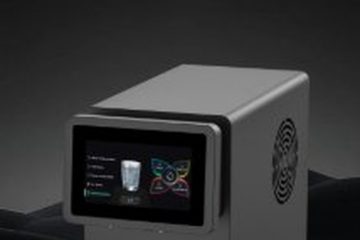
Understanding from where we get water dictates how commercial facilities treat, chill, and dispense it. Municipal grids, deep aquifers, and surface reservoirs deliver raw utility water with wildly variable chemical profiles. Facility managers cannot rely on ambient tap lines alone. Installing a point-of-use Countertop Water Dispenser bridges the gap between raw municipal infrastructure and clean drinking water.
Compact countertop units offer direct thermal conditioning and multi-stage carbon block filtration without monopolizing square footage. Whether an office breakroom supplements a Standing Water Dispenser or a medical clinic replaces a bulky Bottom Loading Water Dispenser, countertop machines deliver reliable daily hydration.
Point-of-Use Market Expansion
Commercial buyers increasingly favor compact filtration footprints over legacy 5-gallon jug deliveries.
Municipal Tap Contamination Realities
Aging lead service lines, disinfection byproducts, and microbial intrusion remain persistent threats. Office occupants drink what flows through that infrastructure. A point-of-use dispenser with carbon block filtration and UV-C gives facilities a final barrier against contamination spikes.
Countertop Water Dispensers: Technical Benchmarks and Specifications
Choosing a Countertop Water Dispenser requires balancing spatial footprint with internal throughput. Internal tanks, compressor placement, and filtration cartridge geometry directly determine how much cold and hot water the unit can deliver during peak demand. Below are representative specification ranges verified against production data sheets for Aguachina countertop platforms.
| Specification Metric | Compact Countertop Dispenser | High-Capacity Countertop Dispenser | Standard Standing Water Dispenser | Mini Water Dispensers |
|---|---|---|---|---|
| Footprint (W × D × H) | 11.0″ × 14.5″ × 15.2″ | 12.2″ × 17.8″ × 16.5″ | 12.5″ × 14.0″ × 42.0″ | 9.8″ × 11.2″ × 13.8″ |
| Cold Tank Volume | 1.8 Liters (Stainless 304) | 3.2 Liters (Stainless 304) | 4.0 Liters (Stainless 304) | 1.0 Liter (Food-grade PE) |
| Cooling Rate (ΔT = 15°C) | 2.5 L/hr @ 85W compressor | 4.0 L/hr @ 110W compressor | 5.0 L/hr @ 120W compressor | 0.8 L/hr (Thermoelectric) |
| Heating Rate (85°C–92°C) | 4.0 L/hr @ 450W band | 6.5 L/hr @ 600W band | 6.5 L/hr @ 600W band | 3.0 L/hr @ 400W band |
| Filtration Stage Types | PP Sediment + Activated Carbon | Sediment + CTO + UF Membrane | Sediment + Pre-Carbon + Block | Direct Bottle Feed (No Filters) |
| Dispense Clearance Height | 8.5 inches (Travel Mugs) | 10.2 inches (Sport Bottles) | 9.5 inches (Standard Cups) | 6.5 inches (Small Cups) |
Heating and Cooling Capacities
Look closely at compressor duty cycles. Cheap units rely on thermoelectric Peltier chips. They struggle to maintain sub-10°C water in warm break rooms. Aguachina’s high-capacity countertop models use sealed refrigeration circuits that recover cold water at 4.0 liters per hour, even when ambient temperature reaches 32°C. Heating recovery is equally critical: a 600W band heater restores 6.5 liters per hour at 92°C, enough to serve back-to-back tea and instant coffee without a long wait.
Footprint and Reservoir Engineering
Reservoir materials determine sanitization frequency. Drawn 304 stainless steel tanks stop biofilm adhesion far more effectively than food-grade polyethylene, particularly in warm, humid environments. Inspectors reviewing a catalog of countertop water dispensers should verify welded tank seam integrity and UV-C sterilization diodes inside the cold reservoir. Tank volume alone does not predict performance: recovery rate, insulation thickness, and compressor horsepower matter more than raw liters.
Flow Rates and Energy Consumption
Dispensing speed matters when lines form in a staff pantry. Standard gravity valves yield an irritating 0.8 liters per minute. Direct-line pressurized solenoids hit 1.8 to 2.2 liters per minute. That cuts fill times for a 20-ounce tumbler down to roughly eight seconds.
Compliance and Regulatory Standards for Countertop Equipment
Plumbing appliances into commercial structures exposes owners to liability if materials leach toxins or electrical components fail. Aguachina’s countertop dispensers are engineered to meet stringent global benchmarks. Procurement teams should verify each certification before issuing purchase orders. Key standards include:
- NSF/ANSI Standard 42: Validates aesthetic effects, confirming chlorine, taste, odor, and particulate reduction.
- NSF/ANSI Standard 53: Certifies health claims, covering lead sequestration, volatile organic compound (VOC) filtration, and cyst removal.
- NSF/ANSI Standard 372: Assures compliance with lead-free plumbing mandates (<0.25% wetted surface lead content).
- IEC 60335-2-15: Specifies electrical safety requirements for commercial liquid heating and dispensing appliances.
Key Verification Checklist:
1. Wetted path materials certified to FDA 21 CFR 177.2600.
2. Hydrostatic burst pressure rating exceeds 300 psi (ASTM D1599).
Material Safety and Extraction Protocols
Water is an aggressive solvent. High-temperature reservoirs accelerate plasticizer migration if low-grade resins are used. Aguachina specifies Tritan copolyester for hot tanks and 304 stainless steel for cold tanks, both of which resist degradation across 10,000+ thermal cycles. Independent leach testing shows BPA and phthalate levels below detectable limits even after prolonged exposure to 92°C water.
Electrical and Thermal Certifications
Hot water scald prevention is not optional in public facilities. Dual bimetal thermal cutoffs prevent dry-boil failures, while mechanical child locks stop accidental hot water discharge.
From Where We Get Water: Supply Sources and Operational Costs
The raw fluid source directly impacts overall operating expenses. Municipal surface water carries heavy sediment loads, accelerating filter changes. Deep aquifer supplies present dissolved mineral profiles that demand scale inhibitors and frequent descaling. Facilities that understand their supply source can forecast cartridge replacement cycles with precision.
Annual Cost Comparison (50-Person Workplace, 250 Workdays):
- 5-Gallon Bottled Water Delivery: $2,850/year ($7.50/bottle + cooler lease)
Frankly, managing bottle storage is a logistical headache. Forklift bays and supply closets end up cluttered with empty jugs and spare caps, and someone always forgets to reorder until the last bottle is empty. Plumbed countertop units eliminate that friction entirely.
Plumbed Municipal Feeds vs. Bottled Refills
Connecting a Countertop Water Dispenser directly to building copper or PEX supply lines delivers continuous water without manual bottle swaps. Pressure regulators maintain 30-70 psi, and inline sediment prefilters protect downstream cartridges from municipal grit. Facilities with existing bottle contracts should compare the amortized cost of plumbed filtration against recurring delivery fees. Most operations break even within 14 months.
Lifecycle TCO Breakdown
Filter cartridge replacement intervals represent the primary ongoing expense for plumbed systems. A typical office replaces sediment and carbon cartridges every 6 months at $42 per set. UV-C lamps require annual replacement at $38. Over a 5-year horizon, total consumable costs rarely exceed $500, whereas bottled water delivery over the same period totals $14,250. The math strongly favors plumbed countertop installations for any facility with more than 15 occupants.
FAQ: Selecting and Operating Countertop Water Dispensers
How does supply water quality influence filter cartridge lifespan?
High turbidity from municipal surface water loads sediment pre-filters rapidly. If total dissolved solids exceed 500 ppm, carbon blocks exhaust within 3 months instead of the standard 6. Hard water above 180 mg/L calcium carbonate accelerates scale formation on heating elements, requiring descaling every 90 days.
What is the ideal incoming line pressure for plumbed countertop units?
Optimal incoming line pressure ranges between 30 and 70 psi (2.0 to 4.8 bar). Pressures exceeding 80 psi risk seal failure at quick-connect fittings. Install a pressure-reducing valve if municipal supply exceeds this threshold. Low-pressure scenarios below 25 psi cause slow tank refill and temperature instability.
Can a countertop unit replace a high-capacity Standing Water Dispenser?
Yes, provided staff headcounts do not overwhelm recovery rates. A quality countertop machine handles 50 users comfortably, provided peak demand does not exceed 10 liters per hour of cold water. Facilities with more than 75 occupants should deploy two countertop units or one standing dispenser.
What maintenance routine keeps cold tanks free of biofilm?
Flush the internal tanks every six months with a food-grade citric acid or hydrogen peroxide solution. Drain completely, circulate the sanitizer for 20 minutes, then flush with fresh water until no residue remains. Units with UV-C diodes require less frequent manual sanitization, but quarterly inspection of the diode window is still recommended.
How much electrical power does an idle dispenser consume?
Modern Energy Star units pull less than 1.2 watts in passive standby. During active heating cycles, consumption spikes to 450-600W, but duty cycles are short. Annual energy cost for a typical office unit averages $18-24, negligible compared to bottled water delivery fees.
Can a Countertop Water Dispenser connect to an Under Sink Water Purifier?
Absolutely. Many commercial kitchens install an Under Sink Water Purifier for centralized multi-stage filtration, then feed purified water to a countertop dispenser for thermal conditioning. This separates filtration from dispensing, extending cartridge life and improving taste.
Does a Mini Water Dispenser provide hot water safely?
Most Mini Water Dispensers utilize simplified heating chambers. They work well for small executive desks or hotel rooms but lack the dual cutoff safety systems found in full-size countertop units. Verify child-lock functionality before deploying in family environments.
How do bottom loading water dispensers compare on counter space?
A Bottom Loading Water Dispenser rests on the floor, preserving counter real estate at the expense of footprint. It eliminates the awkward lifting of 5-gallon jugs onto a top-loading unit. Countertop dispensers deliver the same water quality in a smaller package, making them preferable where floor space is also constrained.
Key Metrics to Track Before Procuring Countertop Systems
Procurement decisions should center on empirical specifications rather than brand aesthetics. Track these five metrics in every vendor comparison sheet.
- Hourly Recovery Capacities: Ensure cooling delivers at least 2.5 L/hr below 10°C and heating maintains 6.5 L/hr at 92°C.
- Filter Micron Rating: Demand 0.5-micron activated carbon blocks to assure lead and cyst reduction.
- Wetted Path Certifications: Request independent test sheets showing NSF/ANSI 42, 53, and 372 compliance.
- Refrigerant Class: Specify R600a systems to satisfy corporate environmental, social, and governance (ESG) targets.
- Drip Tray Capacity: Verify spill reservoir capacity exceeds 0.8 liters to prevent counter flooding between maintenance rounds.
Reviewing where our water comes from reveals why treated dispensing is mandatory for commercial sites. Aguachina helps you translate that reality into a specification that protects occupants and controls cost. Submit a direct procurement inquiry to evaluate facility flow requirements and wholesale pricing.